CBD, CBG, CBN and CBC: Drug Tests, Labels and Safety
Learn what drug tests detect, why CBD or hemp products can still contain THC, and how to read full-spectrum, broad-spectrum, isolate, and COA claims.
Quick Answer: Can CBD Make You Fail a Drug Test?
CBD itself is not the target of a standard cannabinoid drug test. The practical risk is THC in the product. A CBD, CBG, CBN, or CBC product may contain declared THC, more THC than its label suggests, or trace THC that accumulates with repeated exposure. That can lead to a positive, borderline, or hard-to-interpret result depending on the product, amount used, timing, specimen, and testing cutoff.
No label phrase, certificate of analysis (COA), or product type can guarantee that a person will pass a drug test. If a negative test is important for employment, safety-sensitive work, athletics, court supervision, or another program, the safest conclusion is not “this product should be fine.” Read the governing policy and ask the testing program what it tests and how results are reviewed before relying on a cannabinoid product.
What Common Cannabinoid Tests Detect
Workplace programs do not all use the same specimen or rules. Under current federal workplace guidance:
- A urine cannabinoid test looks for a THC metabolite, often called THCC or THC-COOH.
- An oral-fluid cannabinoid test looks for THC.
- A test result does not by itself determine whether someone was impaired or fit for duty.
That distinction matters. A person can feel no “high” from a product and still have a test result connected to THC exposure. Conversely, a drug test is not a precise clock that proves when impairment occurred.
Private employers, athletic organizations, health systems, courts, and state-regulated workplaces may use different panels, cutoffs, confirmation procedures, and policies. Florida medical-marijuana status does not automatically override a workplace or testing policy.
What the Current Evidence Shows
A 2026 systematic review examined 12 studies involving CBD or hemp-oil exposure and cannabinoid drug testing. Most results involving compliant products did not exceed the study's testing thresholds, but the review did not establish zero risk. Positive or ambiguous findings were connected to factors such as THC in the product, higher-than-declared THC, repeated exposure, dose, product variability, or case-report circumstances.
The review is useful, but it cannot produce a personal pass-or-fail percentage:
- The studies were small and used different products, amounts, exposure schedules, specimens, and cutoffs.
- Some evidence came from case reports rather than controlled trials.
- Consumer products do not all match the products tested in research.
- Product labels and actual cannabinoid content can differ.
- The review was not specific to Florida employers or testing programs.
The patient-safe takeaway is narrow: products with little or no verified THC may reduce risk compared with THC-containing products, but the available evidence cannot certify a product or person as “drug-test safe.”
Full-Spectrum, Broad-Spectrum and Isolate Are Not Guarantees
These phrases are useful starting points, not standardized pass-or-fail promises.
Full-spectrum
Full-spectrum usually means a product contains several cannabis compounds and may include THC. The exact amount still has to be checked on the label and matching batch COA. Even a legally compliant hemp product can present a drug-testing concern.
Broad-spectrum
Broad-spectrum commonly means several cannabinoids are present while THC was removed or reduced. It does not prove that laboratory testing found no THC, that every batch is identical, or that repeated use cannot matter.
Isolate
An isolate is intended to contain one isolated cannabinoid, such as CBD. That can narrow the expected ingredient profile, but the word “isolate” does not independently verify manufacturing quality, cross-contamination controls, or the final batch result.
“THC-free” or “zero THC”
These are label or marketing claims. Check what the matching COA actually reports, including the units, the laboratory's reporting limit, and whether THC is listed as not detected, below a quantitation limit, or present in a measurable amount. “Not detected” is not the same as a universal guarantee that another laboratory or testing program will find nothing.
How CBD, CBG, CBN and CBC Differ
CBD
CBD stands for cannabidiol. It is not generally associated with the intoxication caused by THC, but “non-intoxicating” does not mean risk-free. CBD can cause side effects and interact with medicines. The FDA has approved one prescription CBD drug for specific seizure disorders; that approval does not apply to ordinary retail CBD products.
CBG
CBG stands for cannabigerol. It is often sold as a minor-cannabinoid ingredient. Daytime, focus, pain, or mood claims should not be treated as predictable effects without product-specific human evidence. A CBG product can also contain CBD, THC, or other cannabinoids.
CBN
CBN stands for cannabinol and can form as THC changes over time. CBN is frequently marketed for sleep, but the label claim does not prove that the finished product improves sleep. Many CBN formulas include CBD, THC, melatonin, or other ingredients, so the entire label matters.
CBC
CBC stands for cannabichromene. It is less common in consumer products and human clinical evidence is limited. A CBC headline on the package says little about the rest of the formula or its THC content.
For all four cannabinoids, separate three questions: what the product contains, what evidence exists for the exact formula and use, and what an individual's medicines, responsibilities, and testing rules require.
Medical Marijuana and Retail Hemp Are Different Systems
A Florida MMTC product and a retail hemp product do not enter the market through the same legal and testing system. Medical-marijuana products are dispensed through Florida's medical program to qualified patients and caregivers. Retail hemp products are sold under a separate legal framework.
Neither category creates a general workplace-test exemption. A Florida medical-marijuana card also does not turn a positive THC result into proof of current impairment. Patients should read the policy that applies to their job or program and seek qualified legal advice when rights or employment consequences are at stake.
A Better COA and Label Check
Before relying on a product description, compare the package with the COA:
1. Match the exact product name, batch or lot number, and package size.
2. Confirm the laboratory and test date.
3. Read the THC results, not only the large CBD or CBG number.
4. Check whether results are shown per gram, per milliliter, per serving, or for the whole package.
5. Look for the reporting terms ND, LOD, and LOQ and understand that each describes a measurement limit.
6. Check ingredients for added cannabinoids or other active ingredients.
7. Review contaminant panels appropriate to the product type.
8. Treat a missing, unmatched, unreadable, or very old COA as unresolved information.
A COA can help verify what one laboratory measured in one batch. It cannot guarantee a negative drug test, prove a medical benefit, identify every interaction, or make a product suitable for driving or safety-sensitive work.
Practical Steps When Testing Matters
- Read the written policy rather than relying on a coworker, retailer, or product advertisement.
- Ask whether the program uses urine, oral fluid, or another specimen and whether an initial result receives a confirmation test.
- Ask how prescription medicines, medical-marijuana status, and review by a medical review officer are handled.
- Do not rely on “THC-free,” broad-spectrum, or isolate wording without a matching batch COA.
- Keep the product package and batch information if you need to accurately describe an exposure.
- Discuss CBD and other cannabinoid products with a pharmacist or clinician when you take medicines or have a health condition.
- Do not use detox products, sample manipulation, or timing guesses as a safety plan.
This is general education, not legal advice or a way to predict or evade a test.
Bottom Line
CBD, CBG, CBN, and CBC are different from THC, but the product carrying them may still contain THC. Current research suggests positive tests from compliant CBD or hemp-oil products are uncommon in the studied settings, not impossible. Product variability, repeated exposure, testing method, and policy differences prevent a reliable personal guarantee.
When a test has serious consequences, treat every cannabinoid product as a fact-checking task: read the policy, match the batch COA, look directly for THC, and get qualified guidance for medical or legal questions.
Source Note
Sources include a 2026 systematic review of CBD and hemp-oil drug-testing evidence, current SAMHSA federal workplace-testing guidance, FDA consumer and product-sampling information, and CDC CBD safety guidance.
https://pmc.ncbi.nlm.nih.gov/articles/PMC13275792/
https://www.samhsa.gov/substance-use/drug-free-workplace/faqs
How this page was reviewed
This guide was checked against a systematic review of CBD and hemp-oil drug-testing evidence, current federal workplace-testing guidance, FDA product-sampling and consumer information, and CDC safety guidance. It separates CBD from THC, label language from measured batch content, detection from impairment, and study results from a personal pass-or-fail prediction.
No physician, pharmacist, or attorney review is implied. Personal medical questions belong with a qualified health professional, and current program requirements should be checked with the Florida OMMU.
Sources and verification references
Helpful Next Steps
Move from this guide into practical Florida directory pages, doctor pages, and related patient resources.
Related Guides
Keep comparing Florida medical marijuana, hemp, product safety, and patient access topics.
How to Read a Cannabis or Hemp Lab Report in Florida
Learn how to read a cannabis or hemp COA in Florida: match the batch, check potency units, understand ND and LOQ, and review contaminant results.
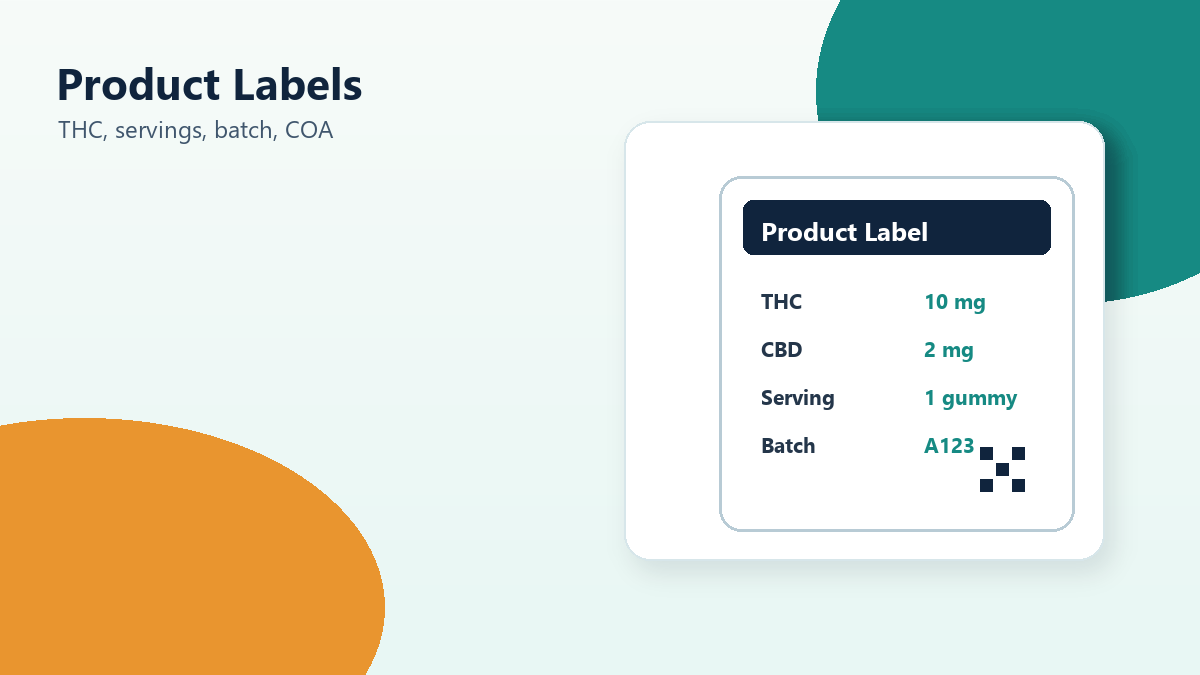
How to Read a Florida Dispensary Product Label
Learn how to read Florida dispensary product labels, including THC, CBD, THCA, serving size, batch details, route, warnings, and lab results.
Florida Hemp Laws vs Florida Medical Marijuana Laws
Compare Florida hemp extract rules with Florida medical marijuana rules, including age limits, dispensaries, doctors, COAs, and patient certification.