How to Read a Florida Dispensary Product Label
Learn how to read Florida dispensary product labels, including THC, CBD, THCA, serving size, batch details, route, warnings, and lab results.
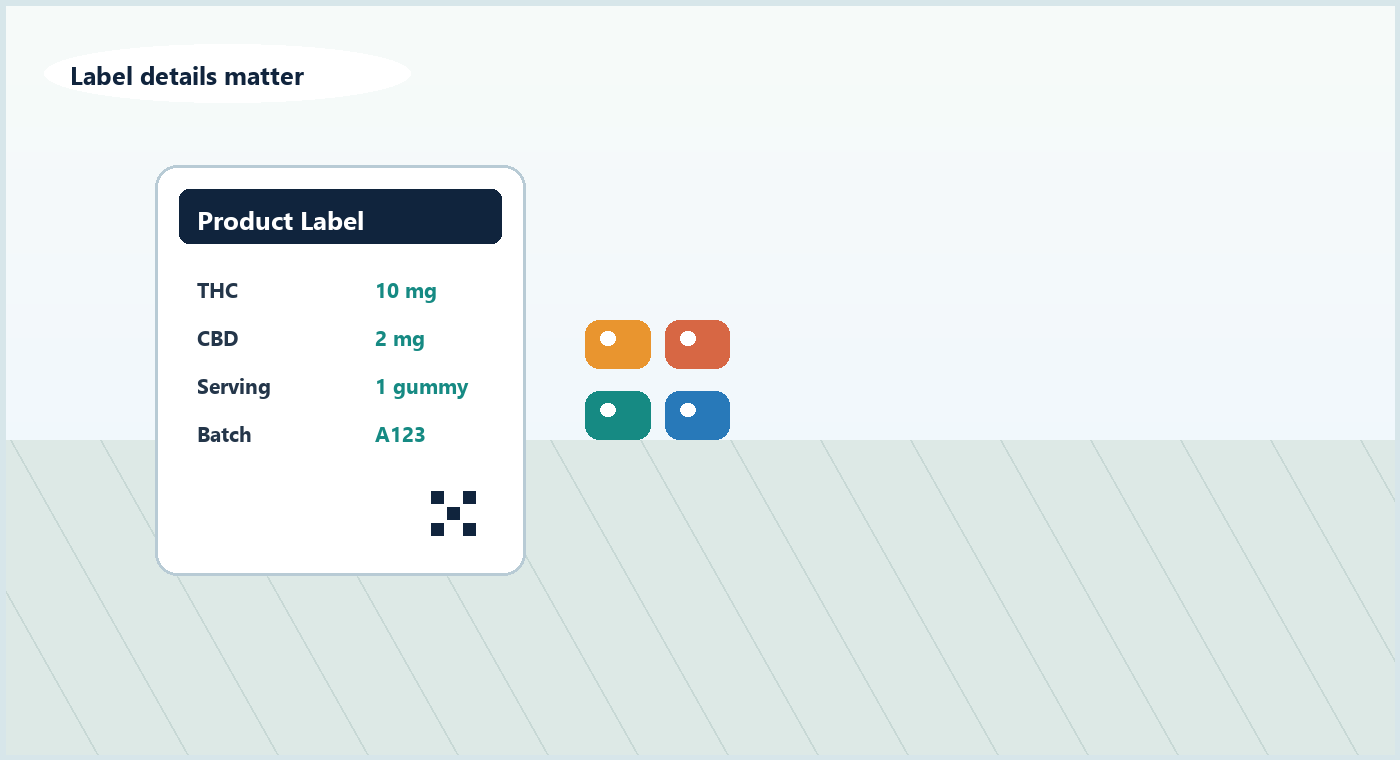
Label Reading Flow
Flower, vape, edible, tincture, topical, or concentrate?
Percent, milligrams, serving, or package total?
Does the COA match the package?
Read timing, storage, and impairment notes.
Short Answer
A dispensary product label helps you understand what you bought, how strong it may be, how to use it, and which batch it came from. Do not rely only on the product name or strain name.
What Florida's Final Packaging Rule Changes
Florida Rule 64-4.219 became effective August 24, 2026. It is a final nonemergency rule for medical marijuana treatment center packaging and labeling. It requires usable products to be in an approved receptacle with a package and a physical patient insert. Receptacles must be child-resistant and, for a product intended for more than one use or serving, resealable.
The rule also addresses what appears on the receptacle and package. The universal symbol must be visible at the required size. Product depictions and unsupported cure claims are not allowed. Edibles have additional ingredient, allergen, storage, expiration, and child-and-pet warning requirements. Products for smoking have a required child warning and marijuana-smoke warning.
A QR or similar smart code may link to a certificate of analysis, the treatment center's website, or product information. The rule says a paper copy must be provided when requested. Treat the code as a route to documentation, not proof that the report matches your package: compare the batch identifiers after opening it.
The rule gives treatment centers 180 days from August 24 to discontinue previously approved packaging that does not comply with the final rule. During that transition, patients may see more than one approved packaging format. That is not a reason to ignore a mismatch, missing patient directions, a broken code, or an unclear product route; ask the treatment center to explain what applies to the product in hand.
Product Type
Start with the route: flower, vape, edible, tincture, capsule, concentrate, topical, or another product type. Route affects onset, duration, and dose.
THC and CBD
Look for THC and CBD amounts. Flower may use percentages. Edibles, tinctures, capsules, and concentrates may show milligrams.
Make sure you know whether the number is per serving, per dose, or per package.
Example: 20 percent THC flower and a 20 mg edible are not the same kind of number. One is a concentration in plant material. The other is a measured dose.
THCA and Total THC
Flower labels may show THCA and THC separately. THCA can convert into THC when heated, so total THC potential may matter for smoked or vaped flower.
Serving Size
Serving size is especially important for edibles and tinctures. A package may contain multiple servings.
If a gummy package says 100 mg total and 10 servings, each serving may be 10 mg.
Batch and Lot Number
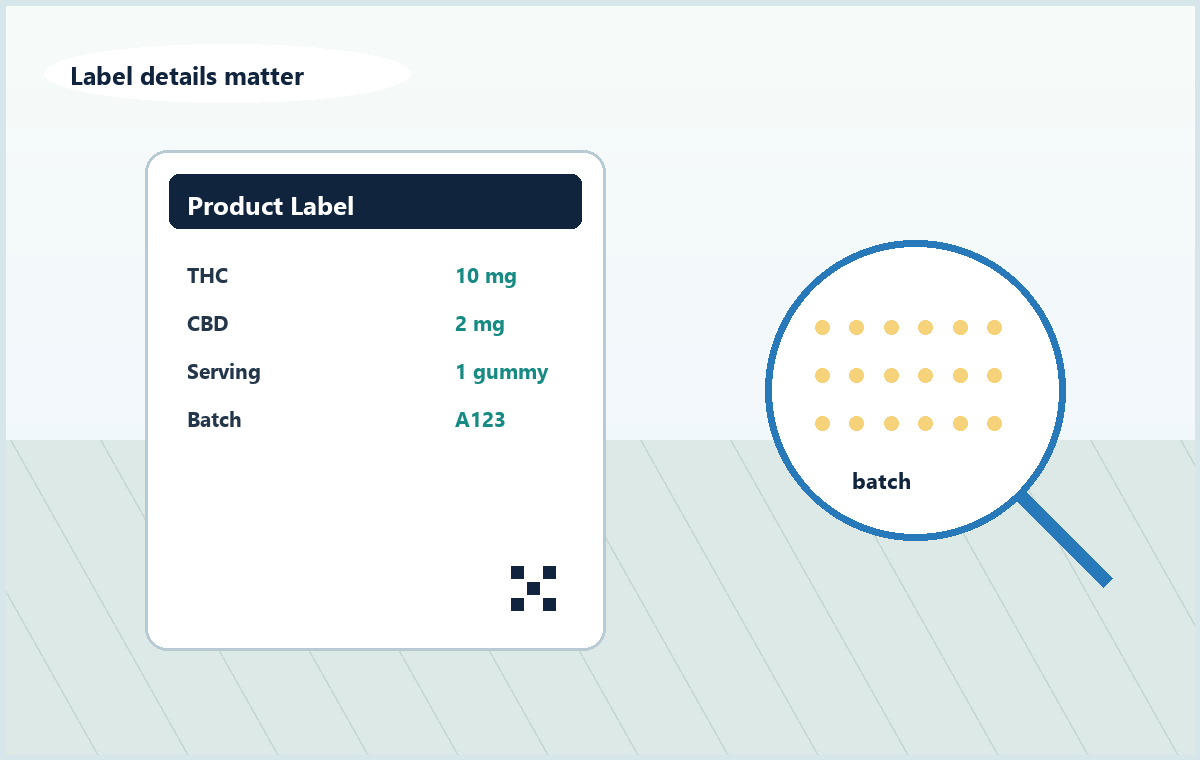
Batch numbers help connect the product to lab testing. If a QR code or COA is available, the batch should match.
Example: if your package says batch A123, the lab report should not be for batch B987. A mismatch means you are not looking at the exact product documentation.
Use the Label and COA Together
The final package label identifies the product in your hand. A certificate of analysis, or COA, reports results for a tested batch. Use them in that order:
- Compare the final package with the online menu listing.
- Find the product form, batch or harvest number, THC and CBD amounts, and serving or dose units on the package.
- Open the lab report, if one is provided, and match the exact batch before reading its results.
- If the batch differs, do not use that report to judge your package.
Florida medical-marijuana labels can contain the patient and physician names. Do not post or send the full label publicly when asking for help. Share only the product and batch area needed to explain the mismatch.
Use the plain-language cannabis COA guide for potency units, contaminant panels, ND, LOD, LOQ, QR codes, and the difference between Florida medical and retail-hemp reports. The menu listing versus product label guide explains why the final package controls when an online description differs.
Terpenes
Some labels show terpene percentages. These can help compare aroma and possible product feel, but they are not guarantees.
Warnings and Instructions
Read instructions about storage, use, impairment, delayed onset, and keeping products away from children and pets.
For an edible, look for the ingredient list, major food allergens, storage instructions, an expiration date, and the required child-and-pet warning. For a product intended for smoking, look for the required warnings about children and marijuana smoke. The exact warnings vary by product type, so do not use one package as a template for every route.
What to Ask the Dispensary
Ask:
- What is the THC per serving?
- How long should I wait before taking more?
- Is this product inhaled, swallowed, held under the tongue, or topical?
- Does this match my physician certification?
- Is a lab report available?
- Can I have the paper lab report if the QR or smart code does not work?
Three Label Examples
Flower label example:
- Product: flower.
- THC: 2 percent.
- THCA: 24 percent.
- Total terpenes: 2.1 percent.
What it means: the flower may have significant THC potential when heated because of the THCA. Terpenes may help explain smell and possible feel.
Edible label example:
- Product: gummies.
- THC: 100 mg per package.
- Servings: 10.
What it means: one serving is likely 10 mg if evenly divided. A new patient should not treat the whole package as one dose.
Vape label example:
- Product: cartridge.
- THC: 78 percent.
- CBD: 0 percent.
- Dominant terpenes: limonene, caryophyllene, myrcene.
What it means: the product is THC-dominant and concentrated. The terpene list may help compare aroma, but dose control is still the main issue.
Red Flags
Be cautious if:
- You cannot find serving size.
- The label and lab report do not match.
- The product route is unclear.
- The THC number is shown but the package total is confusing.
- The product makes medical claims that sound too certain.
Bottom Line
Reading the label carefully is one of the easiest ways to avoid accidental overuse and compare products more intelligently.
Official Sources
Sources include current Florida medical-marijuana packaging law, official OMMU rules and testing materials, CDC cannabis information, and FDA cannabis-derived product guidance.
- Florida Statutes section 381.986
- Florida Rule 64-4.219, MMTC Packaging and Labeling
- Florida OMMU rules and testing methods
- CDC cannabis information
- FDA cannabis research and drug-approval information
Rules and product documents can change. This page was reviewed August 26, 2026. Verify current program requirements with the Florida OMMU.
How this page was reviewed
This guide was checked against current Florida medical-marijuana packaging and testing statutes, the separate Florida hemp-extract COA requirements, and official OMMU testing materials. It separates a batch-level laboratory result from product identity, patient-specific safety, treatment effectiveness, and legal status.
No physician, pharmacist, or attorney review is implied. Personal medical questions belong with a qualified health professional, and current program requirements should be checked with the Florida OMMU.
Sources and verification references
Helpful Next Steps
Move from this guide into practical Florida directory pages, doctor pages, and related patient resources.
Compare product formats
Use format comparisons before treating two products as the same value.
Review concentrate and vape guides
Check oil type, hardware, storage, COA, and concentrate terms.
Learn deal math
Connect package size, THC mg, units, and final price to value comparisons.
Related Guides
Keep comparing Florida medical marijuana, hemp, product safety, and patient access topics.
How to Read a Cannabis or Hemp Lab Report in Florida
Learn how to read a cannabis or hemp COA in Florida: match the batch, check potency units, understand ND and LOQ, and review contaminant results.
THC, CBD, THCA, CBG, and CBN Explained
Learn the basic differences between THC, CBD, THCA, CBG, and CBN so Florida patients can better compare medical marijuana products.
What Makes Marijuana Stronger or Weaker?
Learn why marijuana potency depends on THC, dose, route, tolerance, concentrates, terpenes, freshness, and individual patient response.