THC, CBD, THCA, CBG, and CBN Explained
Learn the basic differences between THC, CBD, THCA, CBG, and CBN so Florida patients can better compare medical marijuana products.
Cannabinoid Cheat Sheet
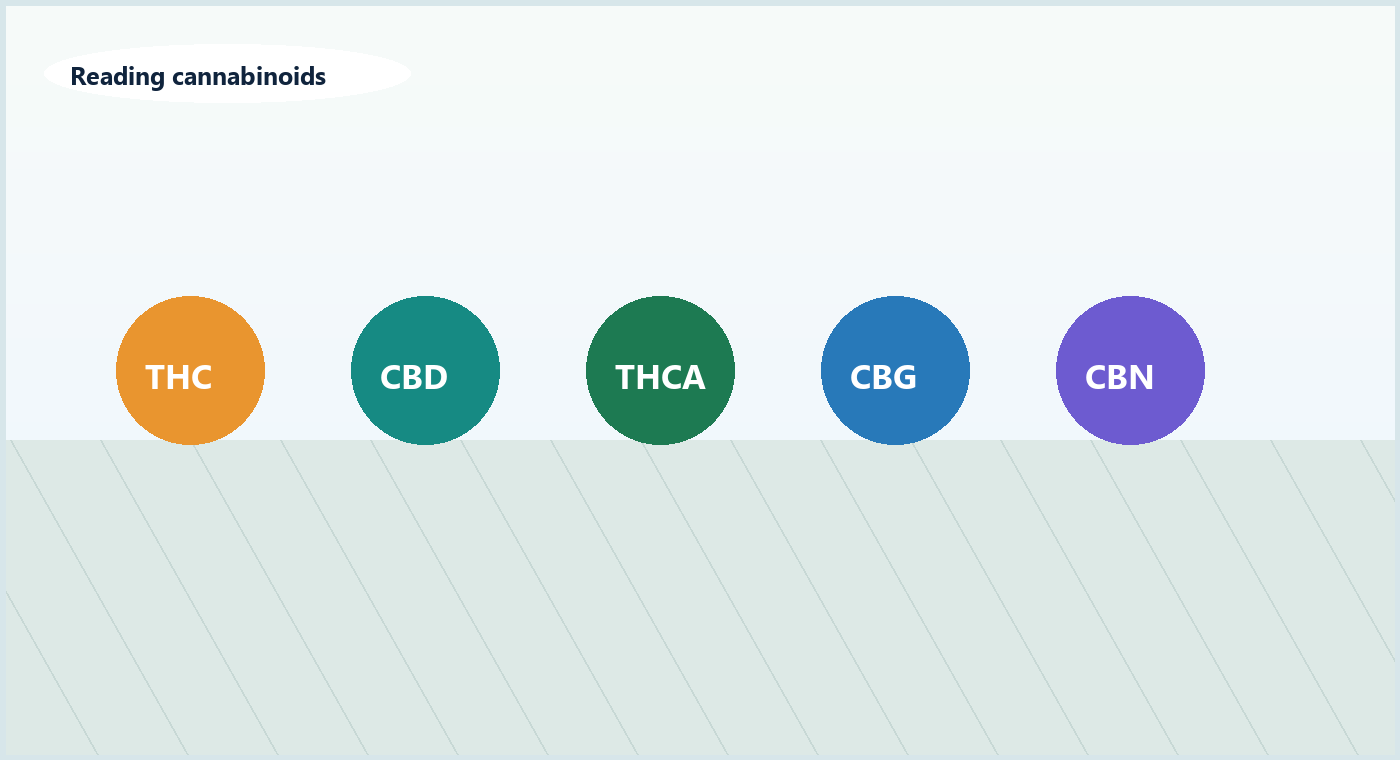
The main cannabinoid associated with marijuana intoxication.
The acidic form that can convert into THC when heated.
Not intoxicating like THC, but still can have side effects or interactions.
Short Answer
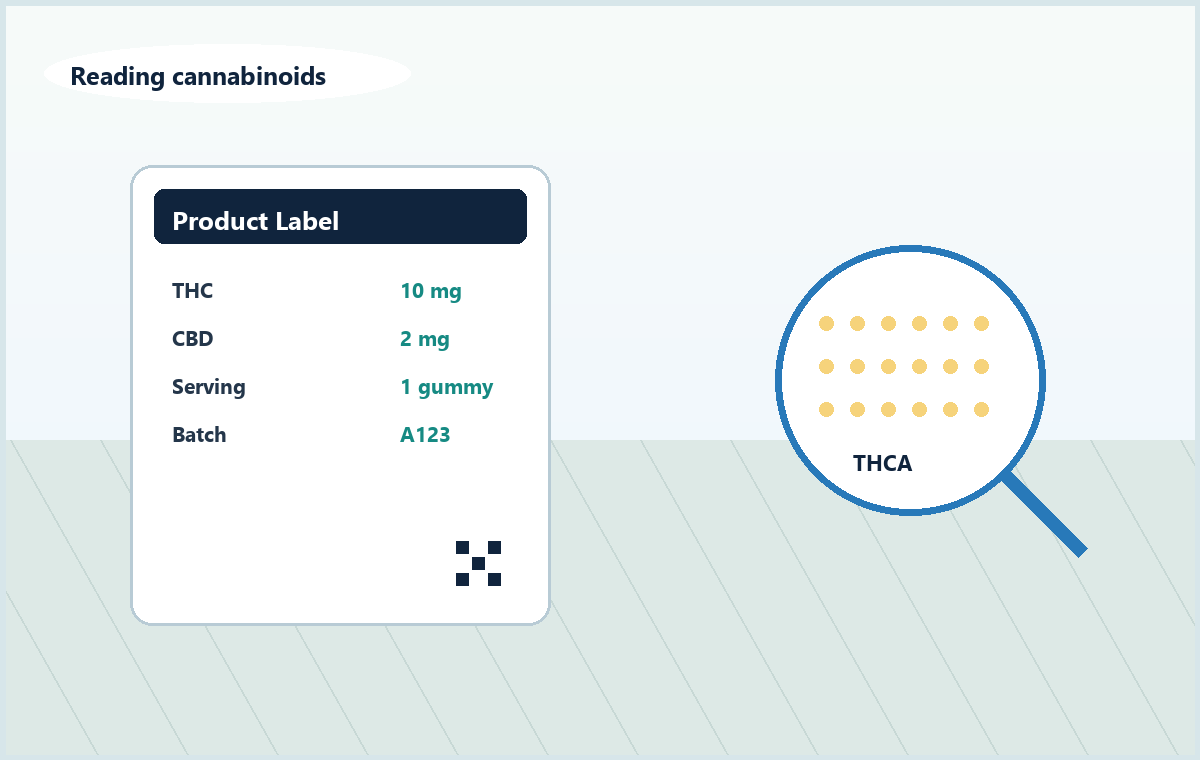
Cannabinoids are compounds found in cannabis. THC is the main intoxicating cannabinoid. CBD is not intoxicating in the same way. THCA is the acidic form that can convert into THC when heated. CBG and CBN are minor cannabinoids that may appear in smaller amounts.
THC
THC usually means delta-9 THC, the compound most associated with the intoxicating effects of marijuana. Products with more THC may feel stronger, but dose, route, and tolerance matter too.
Patients should avoid driving or operating machinery after using THC products.
Example: a 10 mg edible and a few inhalations from high-THC flower may both involve THC, but they can feel different because the route is different.
CBD
CBD does not produce the same intoxication as THC. Some products contain CBD alone, while others combine CBD with THC.
CBD can still interact with medications and may cause side effects for some people, so it should not be treated as risk-free.
Example: a balanced product with both THC and CBD may feel different from a THC-dominant product, even when the THC amount looks similar.
THCA
THCA is tetrahydrocannabinolic acid. It is found in raw cannabis before heat changes it.
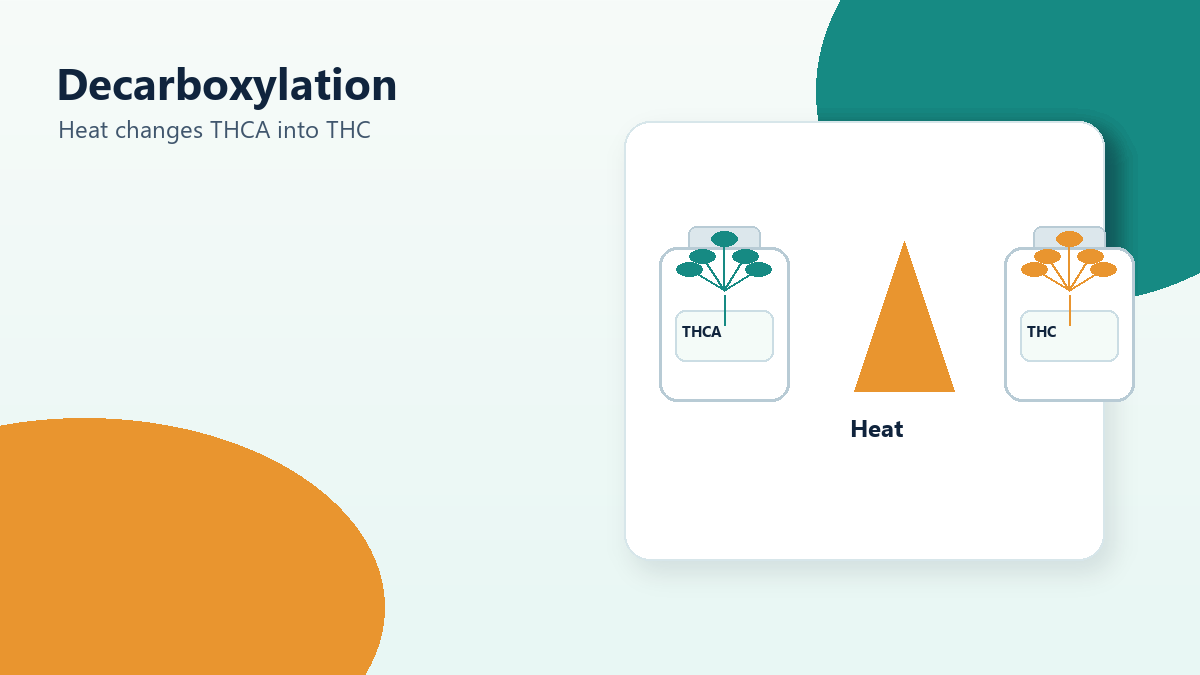
When cannabis is smoked, vaped, baked, or otherwise heated, THCA can convert into THC through decarboxylation. This is one reason high-THCA flower can be intoxicating when heated.
Example: flower can show a high THCA number and a lower THC number before use. Heating changes the practical picture.
CBG
CBG is a minor cannabinoid often found in smaller amounts. Some products emphasize CBG, but patients should be cautious about exaggerated claims.
Look for the lab report to confirm how much CBG is actually present.
CBN
CBN is another minor cannabinoid that may appear as THC ages or degrades. Some products market CBN for nighttime use.
Marketing claims can run ahead of evidence, so compare the label, dose, and your own response carefully.
Why Total Cannabinoids Can Be Confusing
A label may show THC, THCA, CBD, CBDA, CBG, CBN, and total cannabinoids. The most important number depends on the product and route.
For flower, total THC may matter because THCA can convert when heated. For edibles, milligrams per serving may matter more than flower-style percentages.
Example Product Labels
Flower example:
- THC: 1 percent.
- THCA: 23 percent.
- CBD: 0 percent.
Plain-English takeaway: do not stop at the THC line. If the flower is smoked or vaped, THCA can contribute to total THC potential.
Edible example:
- THC: 100 mg per package.
- Servings: 10.
- THC per serving: 10 mg.
Plain-English takeaway: the serving size matters more than the package total.
Tincture example:
- THC: 300 mg per bottle.
- CBD: 300 mg per bottle.
- Suggested measured amount: check the label.
Plain-English takeaway: the bottle total is not the dose. The measured amount is the dose.
Bottom Line
Cannabinoids are part of the product story, but they are not the whole story. Dose, route, terpenes, tolerance, and lab results all matter.
Source Note
Sources include CDC cannabis information, FDA cannabis-derived product guidance, NCCIH cannabis and cannabinoid information, and existing Florida medical marijuana law.
https://www.cdc.gov/cannabis/about/index.html
https://www.nccih.nih.gov/health/cannabis-marijuana-and-cannabinoids-what-you-need-to-know
Helpful Next Steps
Move from this guide into practical Florida directory pages, doctor pages, and related patient resources.
Related Guides
Keep comparing Florida medical marijuana, hemp, product safety, and patient access topics.
Why Cannabis Needs Heat: Decarboxylation Explained
Learn what decarboxylation means, how THCA can convert into THC, and why smoking, vaping, and edibles work differently.
CBD, CBG, CBN and CBC: Drug Tests, Labels and Safety
Learn what drug tests detect, why CBD or hemp products can still contain THC, and how to read full-spectrum, broad-spectrum, isolate, and COA claims.
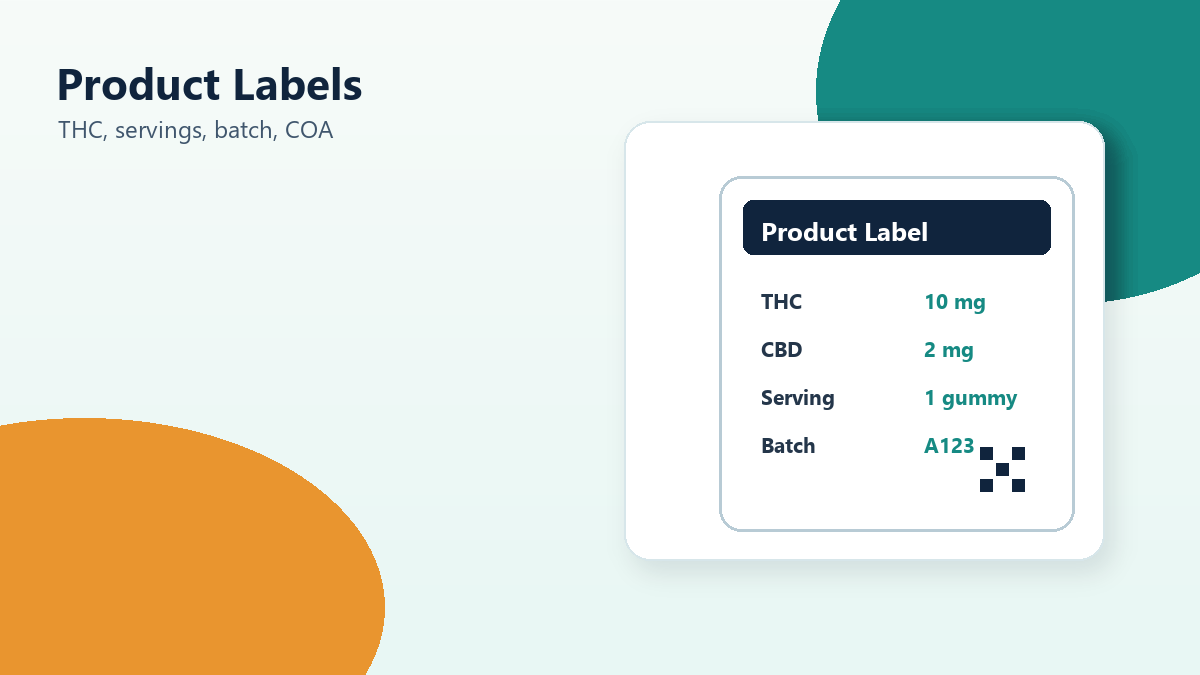
How to Read a Florida Dispensary Product Label
Learn how to read Florida dispensary product labels, including THC, CBD, THCA, serving size, batch details, route, warnings, and lab results.