Flower, Concentrates, and Vapes: Potency Differences
Compare medical marijuana flower, concentrates, and vape products, including why concentrates and cartridges can feel stronger than flower.
Typical Potency Pattern
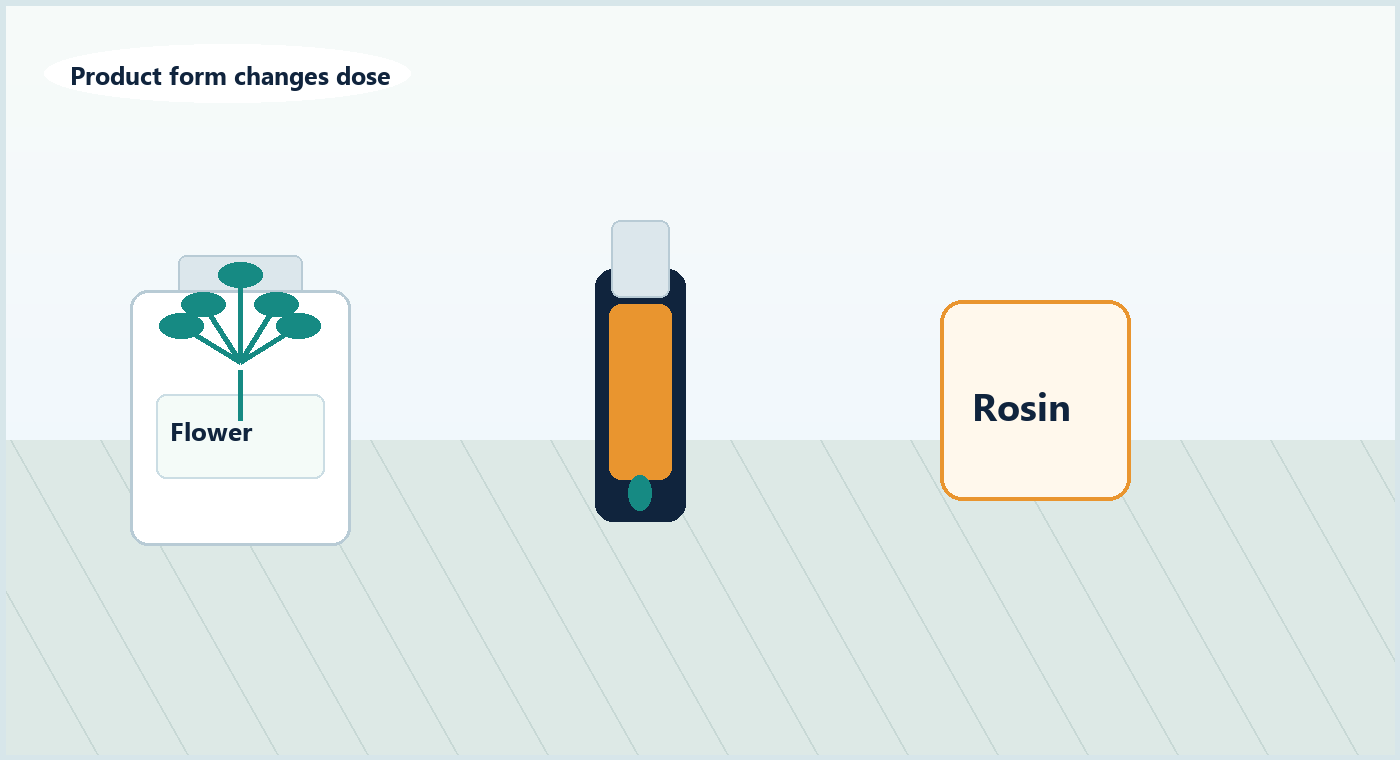
Exact products vary, but concentrates and cartridges are often more concentrated than flower.
Short Answer
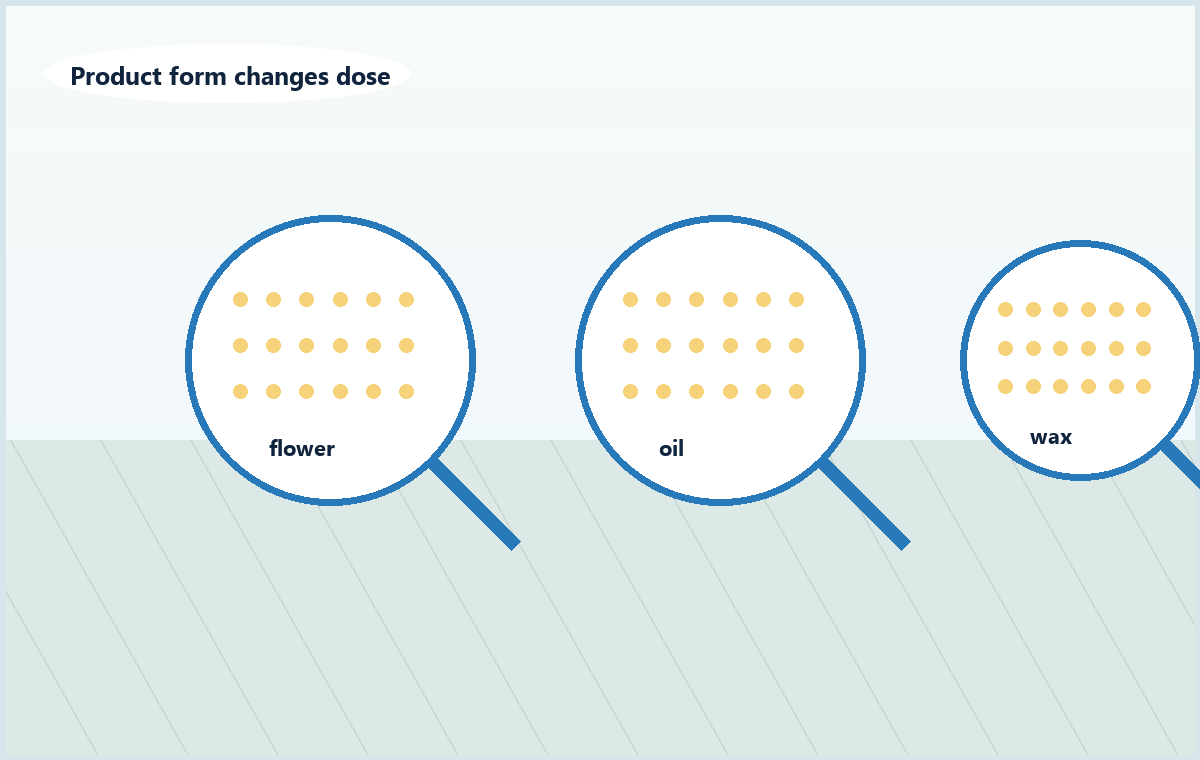
Flower, concentrates, and vapes can all contain THC, but they are not equally potent by weight. Concentrates and vape cartridges often contain much higher THC percentages than flower.
Flower
Flower is dried cannabis. It includes cannabinoids, terpenes, and plant material. THC percentage varies by strain and batch.
Flower may be easier for some patients to titrate slowly, but it can still be strong, especially for new patients.
Example: flower labeled 18 percent THC may be a better starting point for some patients than flower labeled 30 percent THC, but the amount used still matters.
Vape Cartridges
Vape cartridges usually contain cannabis oil. Because much of the plant material is removed, the THC percentage can be higher than flower.
Vapes can be convenient, but convenience can lead to frequent use. Patients should track how much they are actually consuming.
Example: a patient may think "I only used the vape twice," but each draw may be more concentrated than expected.
Concentrates
Concentrates include rosin, resin, wax, shatter, crumble, kief, distillate, and similar products. These products are designed to concentrate cannabinoids and terpenes.
That means a very small amount can contain a large dose of THC.
Example: a rice-grain-sized amount of a potent concentrate can be a meaningful dose. Guessing is not a good strategy for new patients.
Why Percentage Can Mislead
A flower label might show 20 percent THC. A concentrate label might show 70 percent THC or more. But how much you use matters.
The real question is dose: how much THC are you consuming in that session?
Product Comparison Example
Imagine these three menu items:
- Flower: 20 percent THC.
- Vape cartridge: 75 percent THC.
- Rosin concentrate: 70 percent THC.
The vape and rosin are more concentrated, but they are also used differently. A patient comparing them should ask how much product is used per session, how quickly it starts, and whether the route fits their certification and tolerance.
New Patient Caution
Concentrates are usually not the best place for a new patient to guess. If you are new to THC, ask the dispensary pharmacist or your clinician how to compare doses across routes.
Product Quality Matters
For concentrates and vapes, lab testing matters because processing can involve extraction, solvents, additives, or hardware concerns. Buy from licensed sources and review product information.
Bottom Line
Flower is not automatically mild, and concentrates are not automatically unsafe. But concentrates and vapes can deliver more THC quickly, so dose control matters.
Source Note
Sources include CDC cannabis information, FDA cannabis-derived product guidance, NIDA cannabis information, and Florida medical marijuana law.
https://www.cdc.gov/cannabis/about/index.html
Helpful Next Steps
Move from this guide into practical Florida directory pages, doctor pages, and related patient resources.
Compare product formats
Use format comparisons before treating two products as the same value.
Review concentrate and vape guides
Check oil type, hardware, storage, COA, and concentrate terms.
Learn deal math
Connect package size, THC mg, units, and final price to value comparisons.
Related Guides
Keep comparing Florida medical marijuana, hemp, product safety, and patient access topics.
What Makes Marijuana Stronger or Weaker?
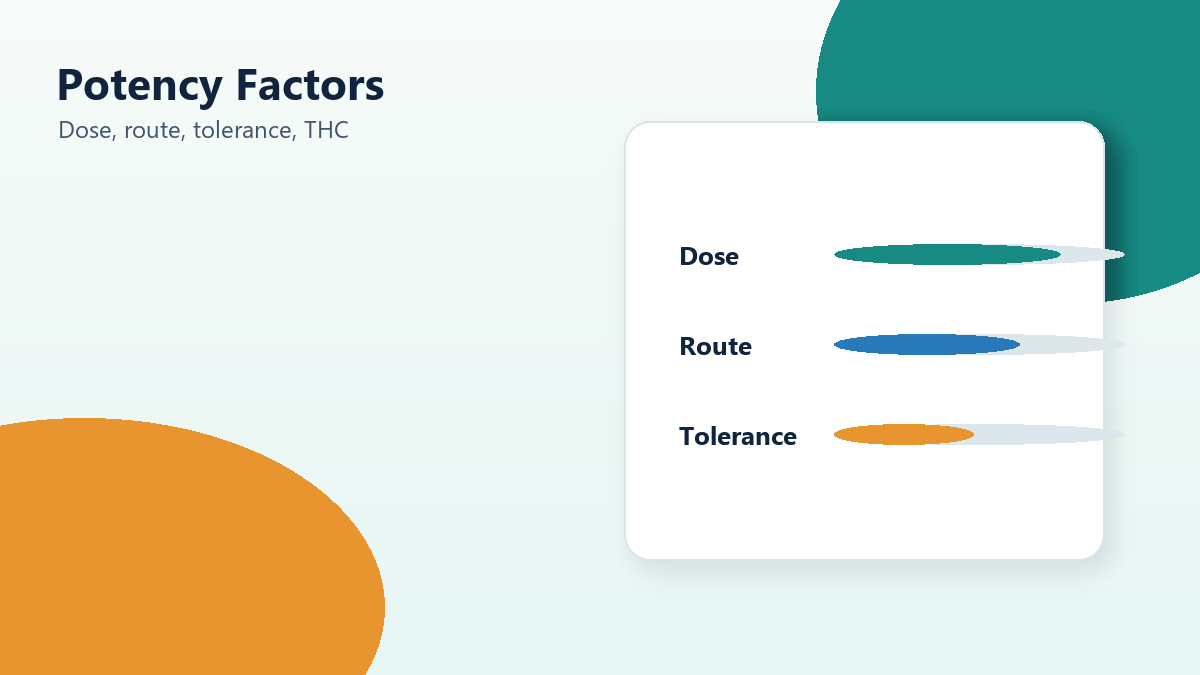
Learn why marijuana potency depends on THC, dose, route, tolerance, concentrates, terpenes, freshness, and individual patient response.
Ways to Use Medical Marijuana in Florida: How the Route Changes the Effects
Learn how inhaled, swallowed, sublingual, topical, and transdermal cannabis differ in absorption, timing, evidence, and Florida route checks.
How to Read a Florida Dispensary Product Label
Learn how to read Florida dispensary product labels, including THC, CBD, THCA, serving size, batch details, route, warnings, and lab results.