
Why Does the Same Cannabis Strain Feel Different?
Same strain, different effects? Compare batch, label, COA, THC/CBD, product route, dose, storage, and your response before buying it again.
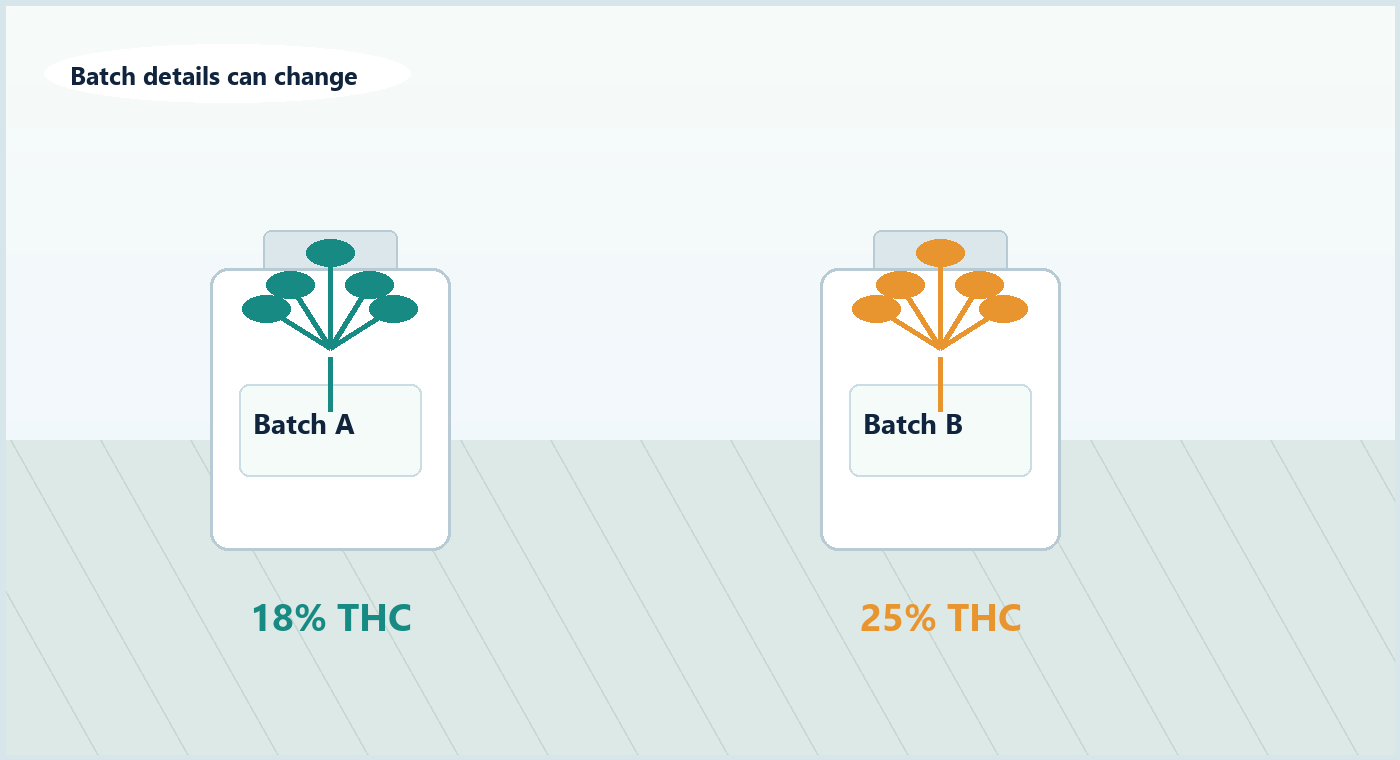
Same Name, Different Batch
Limonene and pinene dominant, brighter aroma.
Myrcene and caryophyllene dominant, heavier aroma.
Food, sleep, stress, and tolerance can change the experience too.
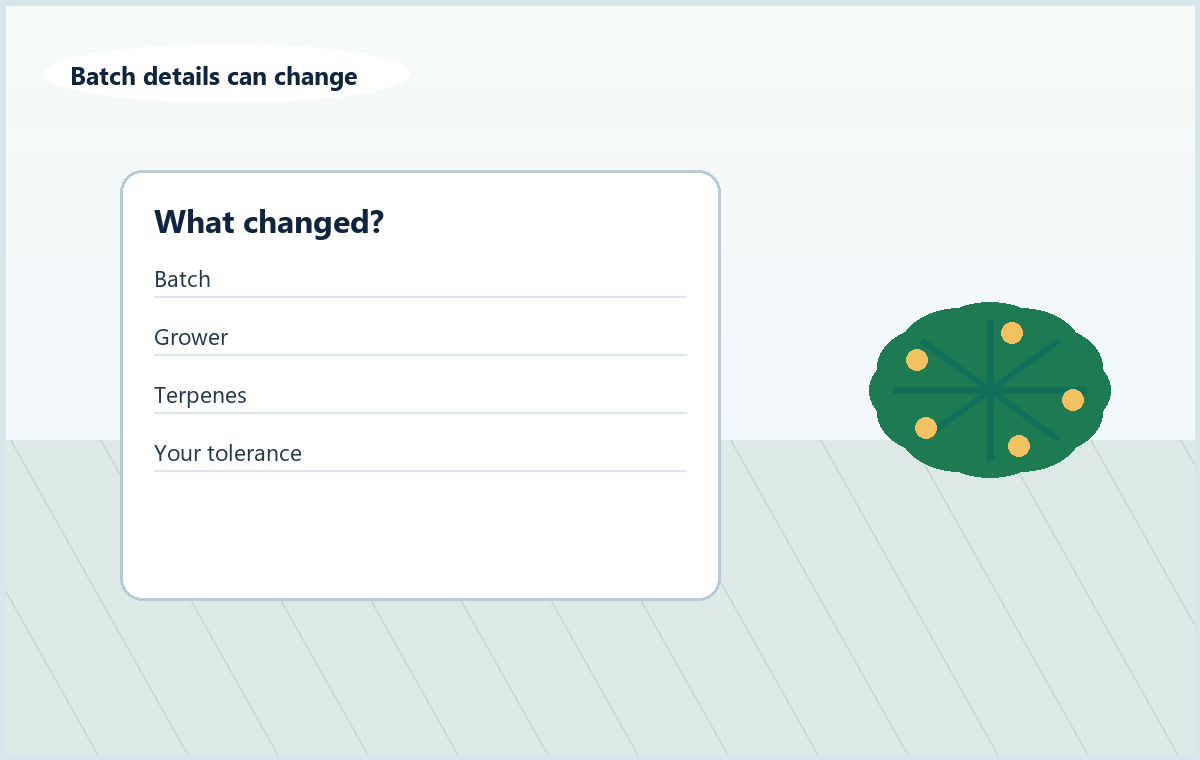
Short Answer
The same strain name does not guarantee the same product or experience. The grower, batch, product route, cannabinoid amounts, ingredients, storage, amount used, and your condition that day can all change the result.
Treat the strain name as a shopping clue. For a better comparison, check the exact package label, batch or lot number, certificate of analysis (COA) when available, product route, and your own notes.
A Strain Name Is Not an Exact Formula
Cannabis names are not standardized like the name and strength on a prescription drug label. Two products sold under the same strain name can come from different growers, batches, plant material, extraction methods, or formulations.
A large study of commercial cannabis flower found substantial chemical diversity and showed that familiar commercial labels did not consistently describe that diversity. That does not predict how a product will affect one person, but it is a good reason not to treat a strain name as a chemical guarantee.
Compare the Product, Not Only the Name
When a familiar strain feels different, compare these details from the old and new packages:
- Brand, grower, or manufacturer.
- Batch or lot number.
- Product form and route, such as flower, vape, concentrate, edible, capsule, or oral product.
- Labeled THC and CBD amounts, including the unit and serving size.
- Other cannabinoids, ingredients, and terpene information when the label provides them.
- COA or lab result tied to the same batch, when available.
- Package, harvest, or expiration dates when listed.
- Storage conditions and whether the package was already opened.
Use the Florida product-label guide and menu listing vs product label guide to make this comparison without relying on menu shorthand.
Batch and Growing Conditions Can Change
Plant genetics are only part of the finished product. Growing conditions, harvest timing, drying, curing, storage, and processing can affect the measurable cannabinoid and terpene profile.
Even two batches from the same grower may not have identical label or COA results. A difference on the label is evidence that the products are not exact matches; it is not proof that one will produce a specific medical effect.
Route and Amount Can Change the Experience
Flower, vape oil, concentrate, edible, and oral products do not deliver cannabinoids in the same way. A familiar name on a different route should be treated as a different product experience.
The amount matters too. Compare the labeled unit and amount used rather than counting only puffs, pieces, drops, or product names. Follow the package directions and your qualified physician's guidance. The route timing guide explains why faster- and slower-feedback products require different waiting decisions.
Your Own Context Can Change
Tolerance, sleep, food, stress, other substances, medicines, setting, and the time between uses may change how someone responds. That means a difference is not automatically proof that the product changed, and a matching label is not proof that the experience will match.
If you take medicines or have an unexpected reaction, discuss the situation with a qualified health professional. Do not use a strain name or terpene description as a substitute for personal medical guidance.
A Simple Same-Strain Check
Use this sequence before deciding that two packages are the same:
- Identify: Match the brand, product form, route, package size, and batch or lot.
- Verify: Compare the label and the batch-specific COA when available. Check THC/CBD units, ingredients, dates, and serving information.
- Record: Note the amount, time, food, other substances, desired effect, unwanted effect, and how long the response lasted.
- Decide carefully: If important details differ, treat it as a new product rather than assuming the old experience will repeat.
The before-you-buy checklist can help connect this product check with registry readiness, deal terms, and final checkout verification.
What Not to Assume
- A shared strain name does not prove shared genetics, chemistry, strength, or effects.
- A higher THC number does not automatically mean a better fit.
- A terpene name does not guarantee a particular treatment result.
- A dispensary menu description is not a replacement for the package label or batch-specific COA.
- One person's experience does not predict another person's response.
Bottom Line
If the same strain feels different, start with the exact package rather than the name. Compare batch, label, COA, route, amount, storage, and your notes. Those details create a more useful real-life record without turning a commercial name into a medical promise.
Source Note
Primary and official references used for this refresh include the PLOS ONE study of commercial cannabis phytochemical diversity, NCCIH cannabis and cannabinoid information, and FDA cannabis consumer information.
How this page was reviewed
This guide was refreshed for clearer search intent, patient-safe next steps, and stronger distinctions between product labels, published evidence, individual response, and personal medical advice. Claims were checked against the primary or official references linked below.
No physician, pharmacist, or attorney review is implied. Personal medical questions belong with a qualified health professional, and current program requirements should be checked with the Florida OMMU.
Sources and verification references
Helpful Next Steps
Move from this guide into practical Florida directory pages, doctor pages, and related patient resources.
Related Guides
Keep comparing Florida medical marijuana, hemp, product safety, and patient access topics.
Indica, Sativa, and Hybrid Explained
Learn what indica, sativa, and hybrid labels mean, why they are imperfect, and what Florida medical marijuana patients should compare instead.
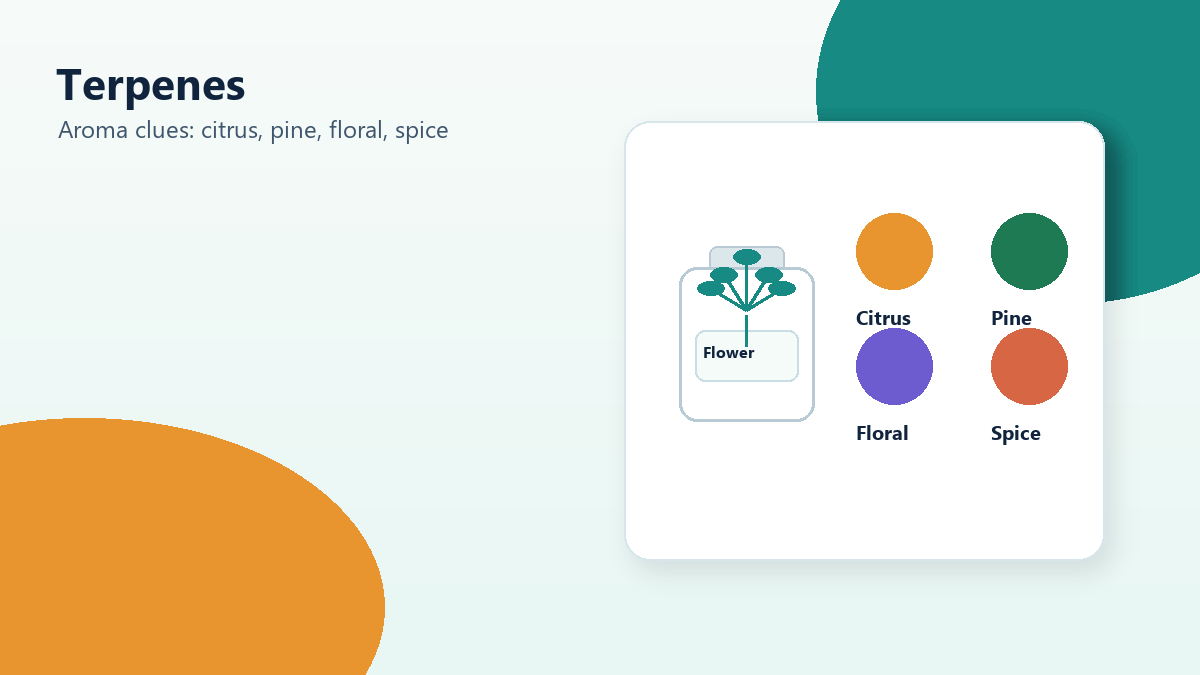
Cannabis Terpenes and the Entourage Effect: What Evidence Shows
Can terpenes predict how cannabis feels? Review the entourage-effect evidence and learn how Florida patients can compare labels, batches, and claims.
What Makes Marijuana Stronger or Weaker?
Learn why marijuana potency depends on THC, dose, route, tolerance, concentrates, terpenes, freshness, and individual patient response.