Cannabis Terpenes and the Entourage Effect: What Evidence Shows
Can terpenes predict how cannabis feels? Review the entourage-effect evidence and learn how Florida patients can compare labels, batches, and claims.
Terpenes Describe Aroma Better Than Outcome
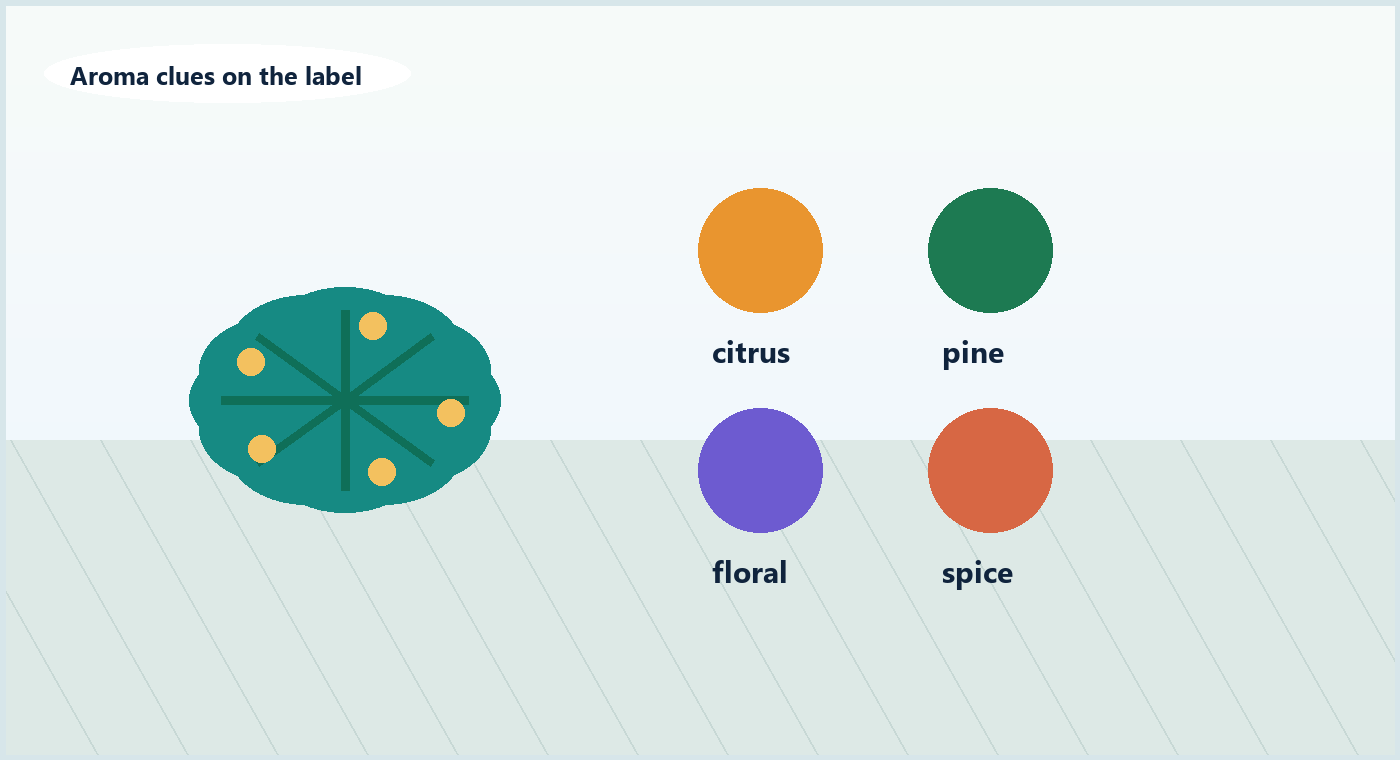
The label can support an herbal, musky, or peppery aroma description.
The label can support citrus and pine aroma descriptions.
The label can support floral and citrus aroma descriptions.
Short Answer
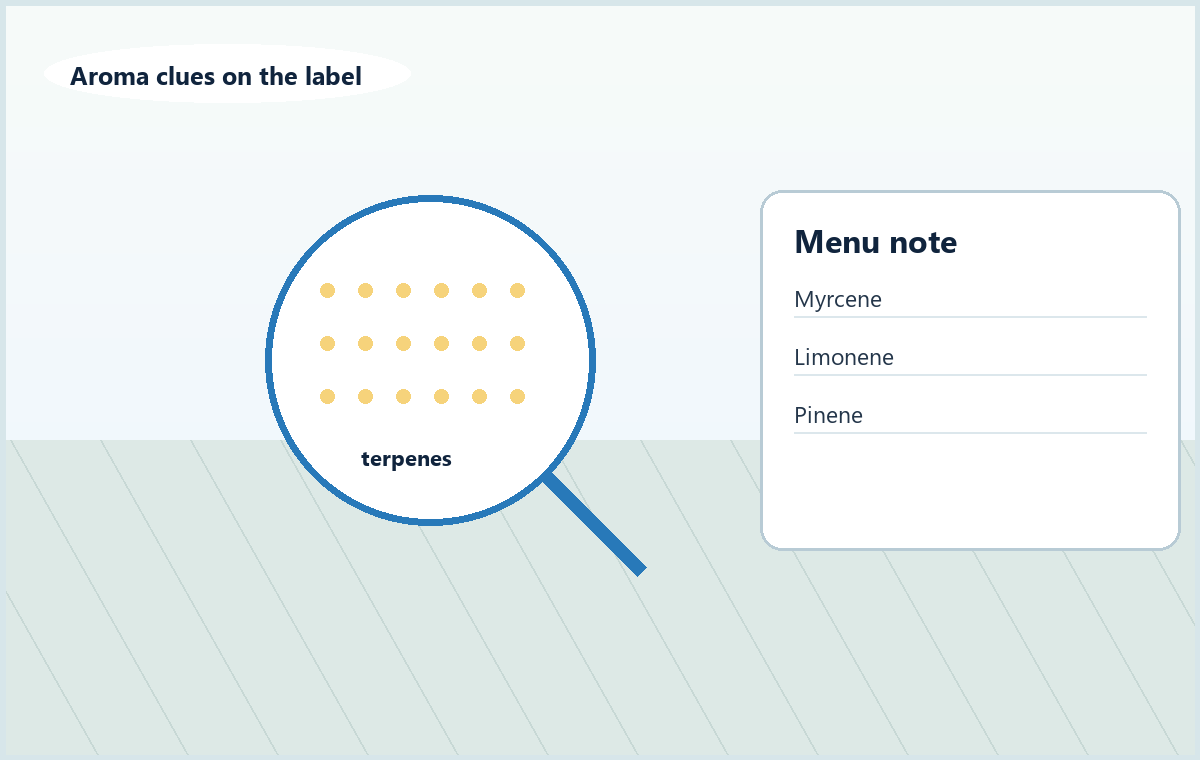
Terpenes are aromatic compounds. They help give cannabis its citrus, pine, floral, peppery, or earthy smell.
Scientists are studying whether certain terpenes can also change some effects of THC or other cannabinoids. A small controlled human study found one narrow signal involving limonene and THC-related anxiety. Lab and animal studies suggest other possible interactions.
That is promising research. It is not proof that a terpene chart can predict whether a Florida dispensary product will make a person sleepy, focused, calm, or pain-free.
Use terpenes to describe aroma and compare exact batches. Treat medical-effect claims as unproven unless the exact product, amount, route, and outcome were tested in people.
What Is a Terpene?
Terpenes are natural chemicals made by many plants. They are not unique to cannabis. Limonene is associated with citrus aromas, pinene with pine, linalool with floral aromas, and beta-caryophyllene with peppery or woody aromas.
Common cannabis terpenes include:
- Myrcene: earthy, musky, herbal, or clove-like.
- Limonene: citrusy, lemony, or bright.
- Pinene: piney, fresh, or sharp.
- Linalool: floral or lavender-like.
- Beta-caryophyllene: peppery, spicy, or woody.
- Humulene: hoppy, earthy, or herbal.
- Terpinolene: sweet, floral, piney, or fruity.
Those descriptions concern smell. They do not establish a treatment effect.
What Is the Entourage Effect?
The phrase "entourage effect" is used for the idea that compounds in cannabis may interact and produce an effect different from one compound alone. It may refer to cannabinoid-cannabinoid interactions, terpene-cannabinoid interactions, or a broad claim about a whole-plant product.
Those are not one proven phenomenon. A specific interaction can be tested. A general statement such as "full spectrum works better because of the entourage effect" is much harder to prove.
Recent evidence reviews say the idea is biologically possible but not established as a stable, predictable clinical effect. Product variability also matters. Two products called full spectrum can contain different compounds in different amounts and use different delivery routes.
What Human Studies Have Found
Limonene with vaporized THC
A 2024 double-blind crossover study tested vaporized THC and d-limonene in 20 healthy adults who used cannabis intermittently. D-limonene alone did not differ from placebo on the measured drug effects.
When the researchers paired the highest tested d-limonene amount with 30 milligrams of THC, participants reported lower "anxious/nervous" and "paranoid" ratings than with 30 milligrams of THC alone. Most other THC effects did not change.
What this supports: one isolated terpene changed a few acute ratings under controlled conditions.
What it does not support: that a citrus-smelling strain treats anxiety, that a menu's limonene percentage predicts a person's response, or that the tested amounts match a Florida flower or vape product.
The highest limonene condition included only 12 participants. The study involved healthy adults, not patients receiving treatment for an ailment. Researchers also said other terpenes, routes, and formulations need separate study.
A CBD-terpene sleep formulation
A randomized crossover trial published in 2025 enrolled 125 people with insomnia. It tested a THC-free oral formula containing 300 milligrams of CBD plus 1 milligram each of eight terpenes.
The formula produced a small average increase in the percentage of sleep measured as slow-wave plus REM sleep. It did not increase total sleep time. The paper reported no adverse events during the study.
This trial cannot tell us whether the change came from CBD, the terpene mixture, or their combination because there was no CBD-only comparison group. It also did not test dispensary flower, a vape, or a typical retail tincture. The research was funded by the company behind the formulation, and several authors reported company equity.
That makes it a useful formulation study, not proof that a terpene labeled "sleepy" treats insomnia.
What Lab and Animal Studies Mean
Lab and animal studies can show whether an interaction is possible. They cannot prove that a retail product improves a human symptom.
A 2020 receptor study tested several common terpenes with cannabinoid receptors and found no clear evidence that they directly changed the tested actions of THC, CBD, or internal cannabinoids. Beta-caryophyllene showed a possible weak effect at one receptor. This argues against one simple receptor explanation, but it does not rule out every pathway.
A 2021 mouse study found that some terpenes produced cannabinoid-like behaviors and added to some effects of a synthetic cannabinoid drug. That supports more research. A mouse response to isolated compounds and a synthetic drug is not a human treatment result.
The honest conclusion is mixed: some experiments find possible interactions, others do not, and human evidence remains narrow.
Can Terpenes Predict Sleepy, Relaxing, or Uplifting Effects?
Not reliably.
Dispensary menus may connect myrcene with relaxation, limonene with mood, pinene with focus, or linalool with sleep. These are common marketing categories. They are not dependable medical rules.
For example, a myrcene-dominant flower may smell earthy. That label alone does not prove it will cause "couch lock." A limonene-dominant flower may smell citrusy. That does not prove it will improve mood or reduce anxiety.
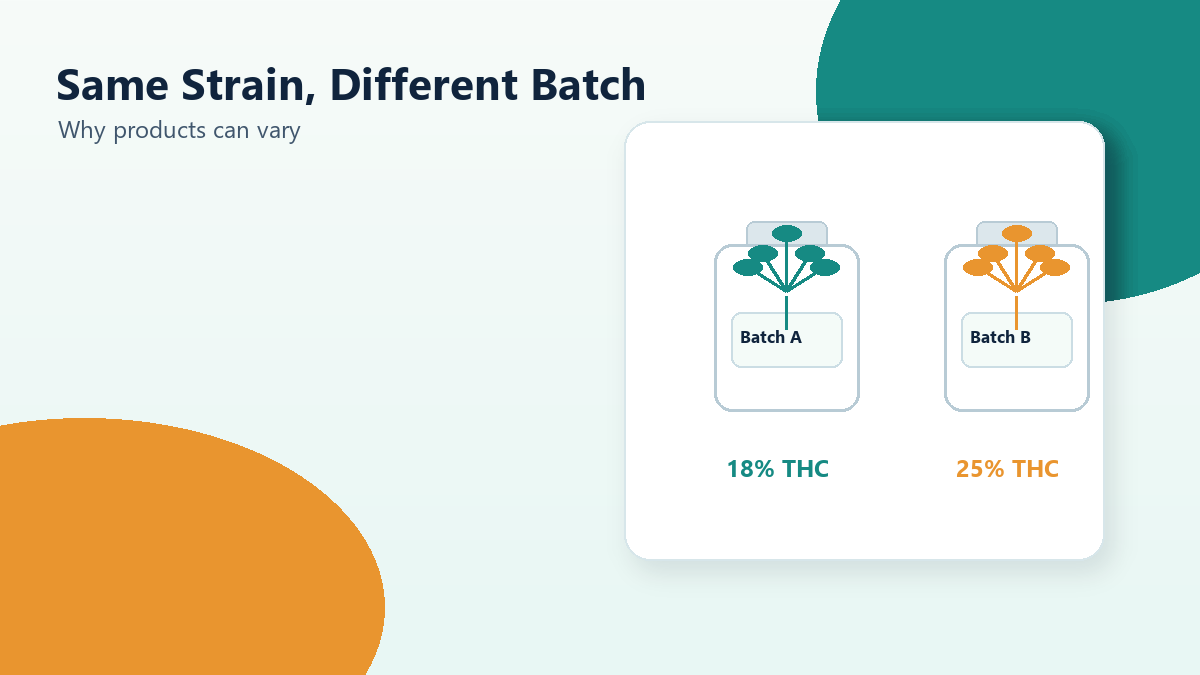
The amount of THC and CBD, serving size, route, other ingredients, tolerance, medicines, food, sleep, and setting can all change the experience. The same strain can also differ by batch.
How to Read a Terpene Label or COA
Use a terpene result as one part of a batch comparison:
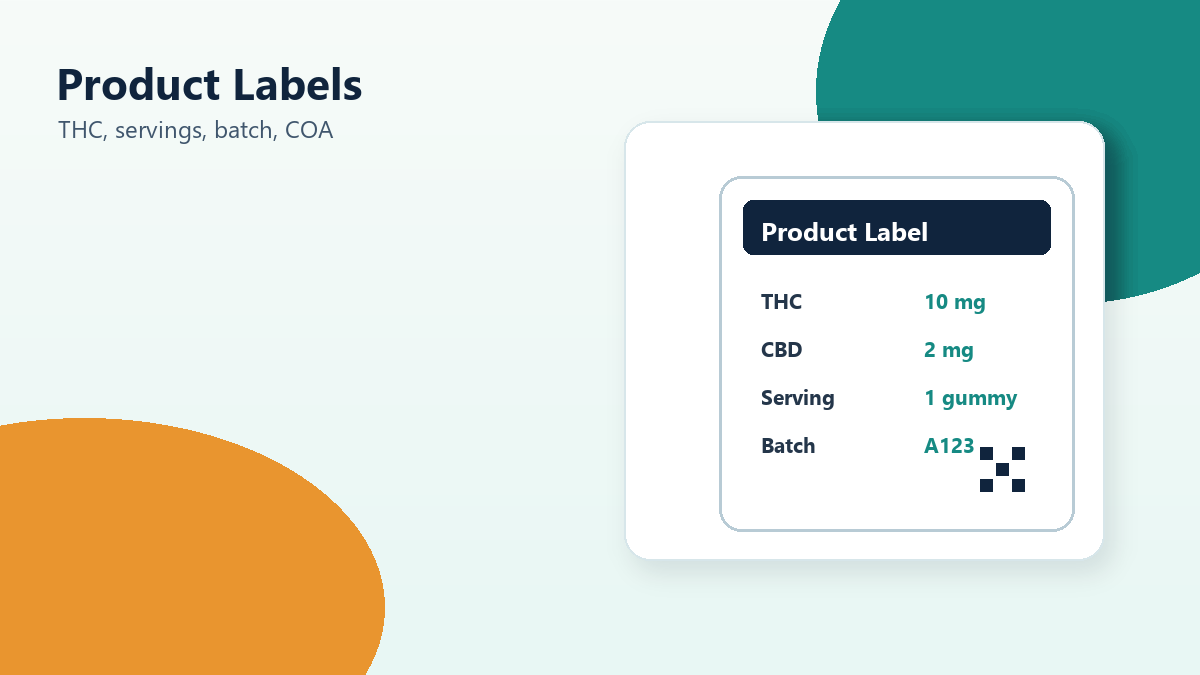
1. Match the product name and batch number. A report for another batch may not describe the package in front of you.
2. Check the units. A percentage and milligrams per gram are different ways to report an amount.
3. Look beyond total terpenes. A total does not show which terpenes make up that number.
4. Separate identity from outcome. A lab can identify and measure compounds. It cannot predict your medical benefit or impairment.
5. Compare the route and cannabinoid amounts. Flower, a vape, an edible, and an oral liquid can produce different timing and exposure.
6. Check ingredients. Added botanical terpenes and cannabis-derived terpenes can create similar names on a label but do not prove equivalent effects.
Use the cannabinoid lab-report guide for batch matching and potency units. Use the Florida product-label guide for route, servings, ingredients, warnings, and patient-label checks.
Three Better Ways to Compare Products
Compare aroma without predicting treatment
Product A lists myrcene and beta-caryophyllene. Product B lists limonene and pinene. It is reasonable to expect different aroma profiles. It is not reasonable to conclude from those names alone that one treats sleep and the other improves focus.
Compare the exact batch
If two jars share a strain name but have different batch numbers, compare THC, CBD, other reported cannabinoids, terpenes, production dates, and storage. The name is not a fixed chemical recipe.
Change one variable at a time
If a patient and qualified clinician decide to use a product, a private log can record the exact product, batch, route, labeled amount, time, food, intended goal, observed response, and unwanted effects. Changing several variables at once makes the result hard to interpret.
Personal notes can reveal a repeatable pattern for one person. They do not turn that pattern into a general medical claim.
Full Spectrum Does Not Automatically Mean Better
"Full spectrum," "broad spectrum," "live," and "whole plant" can describe different products and manufacturing choices. The words do not prove a clinical advantage.
Ask what the finished product contains, whether a matching batch report is available, how it is used, and what evidence supports the exact claim. A study of an isolated terpene does not validate every full-spectrum product. A study of one fixed mixture does not validate another mixture.
The CDT versus BDT terpene guide explains source terminology without treating either source as a safety or treatment guarantee.
Practical Questions for a Physician or Pharmacist
Bring the exact label or batch report. Useful questions include:
- Could THC, CBD, or another ingredient add to drowsiness or interact with my medicines?
- Does the route change the safety concern for me?
- Which symptom or daily function should I track?
- What unwanted effects should make me stop and call?
- Does any evidence apply to this exact formula, or only to a different research product?
Terpenes should not distract from larger safety questions about dose, impairment, pregnancy, heart or mental-health risks, drug interactions, and driving. The medicine and driving guide connects those checks.
Frequently Asked Questions
Is the entourage effect proven?
No stable, predictable clinical entourage effect has been proven for cannabis products as a group. Researchers have found some specific interactions worth studying, including a small controlled limonene-and-THC signal.
Can a terpene profile predict whether cannabis feels sleepy or energetic?
Not reliably. It can describe part of the product's chemistry and aroma. Dose, route, cannabinoids, formulation, tolerance, and the individual response matter.
Does the limonene study prove citrus strains reduce anxiety?
No. It tested isolated d-limonene with controlled vaporized THC amounts in 20 healthy adults. It did not test strain names, anxiety treatment, or Florida dispensary products.
Are full-spectrum products medically better than isolates?
Not as a general rule. Evidence must match the exact compounds, amounts, route, and health outcome. "Full spectrum" alone does not establish superiority.
Does a COA show how a product will affect me?
No. A matching COA can report what the laboratory measured in a batch. It cannot predict benefit, side effects, impairment, or a personal interaction.
Bottom Line
Terpenes are real, measurable parts of cannabis chemistry. Their clearest everyday use is describing aroma and helping compare exact batches.
Research into terpene-cannabinoid interactions is active, and a few human findings are worth following. The evidence does not yet support turning terpene names into treatment promises or predictable effect categories.
For a Florida patient, the safer approach is simple: verify the batch, read the complete label, compare THC and CBD amounts and route, treat marketing language as marketing, keep careful notes, and take personal medical questions to a qualified health professional.
Source Note
The evidence review below links the controlled human studies, critical reviews, receptor and animal studies, and current NCCIH research summary used for this page.
How this page was reviewed
This guide was checked against controlled human studies, critical evidence reviews, receptor and animal experiments, and the current NCCIH research summary. It separates established aroma chemistry from early interaction signals, distinguishes people from animals and laboratory systems, and does not transfer a result from an isolated compound or fixed formula to a Florida dispensary product.
No physician, pharmacist, or attorney review is implied. Personal medical questions belong with a qualified health professional, and current program requirements should be checked with the Florida OMMU.
Sources and verification references
- Controlled human d-limonene and THC crossover study
- CBD-terpene insomnia crossover trial
- Critical narrative review of the entourage-effect evidence
- Systematic review of cannabis terpene and entourage claims
- Common terpenes and cannabinoid-receptor laboratory study
- Terpene cannabinoid-like effects in mice
- NCCIH terpene and minor-cannabinoid research summary
- NCCIH cannabis and cannabinoids overview
Helpful Next Steps
Move from this guide into practical Florida directory pages, doctor pages, and related patient resources.
Related Guides
Keep comparing Florida medical marijuana, hemp, product safety, and patient access topics.
Indica, Sativa, and Hybrid Explained
Learn what indica, sativa, and hybrid labels mean, why they are imperfect, and what Florida medical marijuana patients should compare instead.
Why Does the Same Cannabis Strain Feel Different?
Same strain, different effects? Compare batch, label, COA, THC/CBD, product route, dose, storage, and your response before buying it again.
How to Read a Florida Dispensary Product Label
Learn how to read Florida dispensary product labels, including THC, CBD, THCA, serving size, batch details, route, warnings, and lab results.